


The Importance of PCI Compliance in Ecommerce
In the world of e-commerce, information security is a critical factor. Every year, thousands of transactions are compromised due to vulnerabilities in ecommerce platforms, exposing credit card data and increasing the risk of fraud. This not only results in financial losses but also damages the company’s reputation.
The Payment Card Industry Data Security Standard (PCI DSS) establishes a set of security standards to protect customers’ financial information. Compliance with PCI DSS is mandatory for any business that accepts card payments, and its implementation helps reduce risks, ensure secure transactions, and avoid regulatory penalties. An adequate compliance strategy is, therefore, an essential component for the trust and stability of any e-commerce business.
What is PCI DSS and How Is It Applied
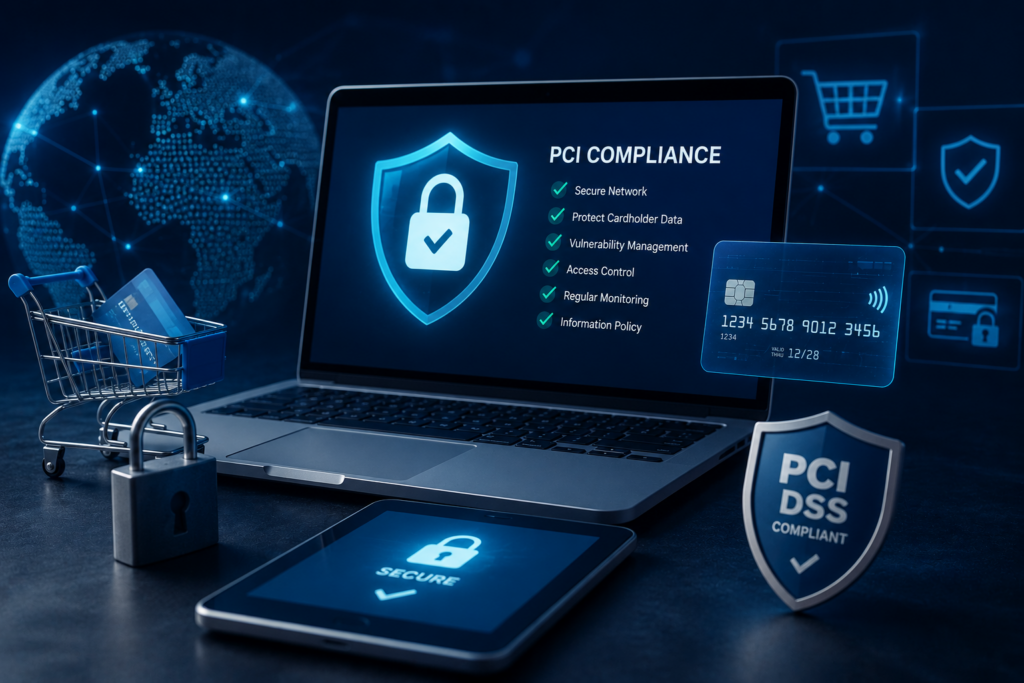
PCI DSS consists of 12 core requirements covering areas such as data protection, access control, network monitoring, data encryption, and the establishment of security policies. These requirements are designed to ensure that all payment card information is handled securely from the moment it is captured through to its storage or processing.
Compliance with PCI DSS involves not only implementing technical measures but also integrating clear policies and procedures into business operations. This includes regular audits, staff training, and the adoption of ecommerce platforms that already meet built-in security standards, such as BigCommerce. Implementing these measures allows businesses to protect sensitive data without disrupting their customers’ shopping experience.
Risks and Consequences of Non-Compliance with PCI DSS
Ignoring PCI DSS standards can lead to serious consequences. Among the most significant risks are leaks of sensitive information, disruptions to ecommerce operations, regulatory fines, and a loss of customer trust. Security breaches not only result in immediate additional costs but can also damage long-term relationships with users.
Furthermore, fixing vulnerabilities after an incident is often more costly and complex than implementing preventive measures. Therefore, planning and awareness of PCI compliance from the online store’s design stage are crucial for minimizing risks and ensuring secure and efficient operations.
Best Practices for Implementing PCI Compliance
There are several best practices for ensuring effective compliance with PCI DSS. These include encrypting sensitive data, segmenting networks to limit unauthorized access, strictly controlling access and permissions, constantly monitoring activities, and conducting regular audits.
Additionally, it is advisable to adopt a continuous approach, where security is not a one-time process but an integral part of daily operations. This includes updating systems, reviewing processes, training teams, and adapting to new threats or regulatory changes. In this way, ecommerce remains protected and prepared to operate reliably over time.
Organizational Culture and Security Awareness
Technology alone does not guarantee security. Organizational culture and team awareness are equally important. Every team member must understand the risks associated with handling sensitive information and follow clear protocols for managing customer data.
Promoting shared responsibility, ongoing training, and compliance with internal policies helps reduce human error, prevent vulnerabilities, and ensure that the ecommerce platform operates securely and reliably. The combination of technology, processes, and culture is key to robust PCI DSS compliance.
How Sphere Helps Ensure Security and Compliance
At Sphere IT Consulting, we assist companies in implementing PCI Compliance, ensuring that every e-commerce business meets the necessary standards to protect sensitive information and avoid penalties. Our approach integrates the implementation of secure e-commerce platforms, data protection policies, ongoing monitoring, and team training.
In this way, companies can build consumer trust, reduce risks, and maintain a more secure and reliable e-commerce operation.
Source:
PCI Compliance: A Guide to Meeting Today’s Requirements. https://www.bigcommerce.com/articles/ecommerce/pci-compliance